LiFePO4 Battery Applications: Portable Power, RV, Marine, Backup and Lead-Acid Conversion Guide

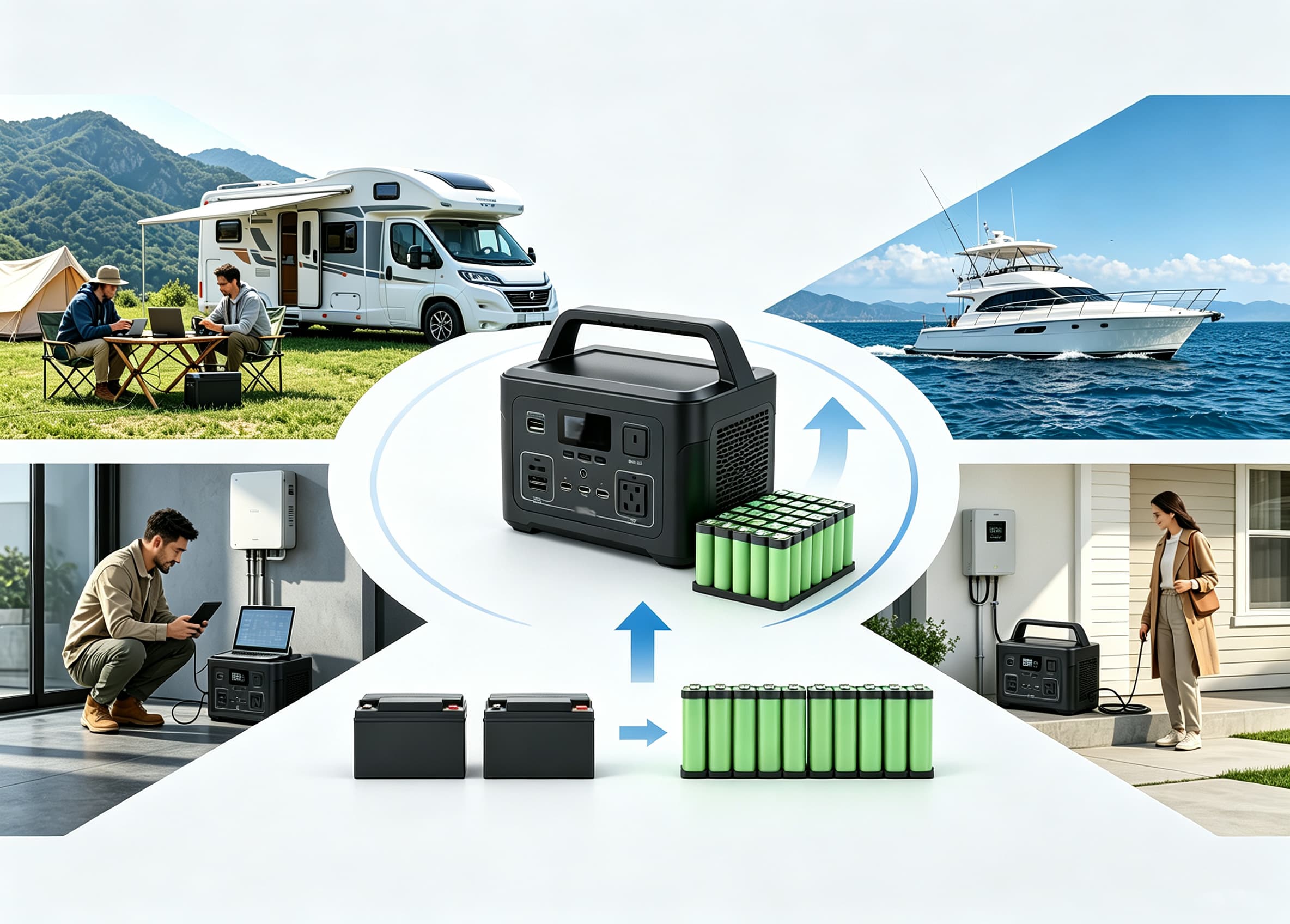
Not every battery stays inside a home energy storage system. Some power outdoor adventures, some travel thousands of kilometers in RVs, some operate on boats, and others support critical backup applications in remote areas.
This is where LiFePO4 (Lithium Iron Phosphate) battery technology demonstrates its advantages.
Compared with traditional lead-acid batteries, LiFePO4 solutions offer:
- Higher usable capacity
- Longer cycle life
- Lower maintenance requirements
- Faster charging capability
- Lighter weight
For portable power users, RV owners, marine applications, off-grid projects, and energy solution providers, upgrading from lead-acid to LiFePO4 can significantly improve system performance and reliability.
This guide explores the most common LiFePO4 battery applications and explains why lithium replacement is becoming the preferred choice for mobile and backup power systems.
Use Case 1 — Camping & Outdoor Portable Power
Outdoor activities increasingly require reliable electricity for communication, entertainment, and essential equipment.
A LiFePO4 portable power station provides a cleaner and quieter alternative to traditional fuel generators.
Typical Applications
A portable LiFePO4 power system can support:
- Refrigerators
- LED lighting
- Laptops
- Cameras and drones
- Mobile devices
- Small cooking equipment
Why Choose LiFePO4?
Compared with AGM or traditional lead-acid batteries, LiFePO4 provides:
- Higher usable depth of discharge
- Longer operating time
- Reduced battery weight
- Better cycle performance
A typical portable power application usually ranges from:
- Capacity: 0.5–2 kWh
- Output power: 1–2 kW pure sine wave inverter
For outdoor enthusiasts and professional users, LiFePO4 portable power solutions provide reliable electricity without noise, fuel, or regular maintenance.
Use Case 2 — RV / Campervan Lithium Battery Upgrade
Replacing lead-acid batteries with LiFePO4 is one of the most popular upgrades in RV and campervan applications.
Many RV owners are switching from:
- Flooded lead-acid batteries
- AGM batteries
to:
- 12V LiFePO4 batteries
- 24V LiFePO4 battery systems
Why Upgrade from Lead-Acid to LiFePO4?
A typical 100Ah lead-acid battery may only provide around 50Ah of usable capacity due to recommended depth-of-discharge limits.
A 100Ah LiFePO4 battery can provide significantly more usable energy while maintaining a much longer cycle life.
Key advantages:
- Longer off-grid runtime
- Lower battery weight
- Faster charging
- More available energy capacity
- Maintenance-free operation
Recommended System Considerations
A proper RV lithium conversion should consider:
- Battery voltage compatibility
- Charger settings
- Solar controller compatibility
- Alternator charging protection
For engine-based systems, a DC-DC charger is commonly recommended between the alternator and LiFePO4 battery to ensure safe and controlled charging.
Use Case 3 — Marine & Boat Battery Systems
Marine environments create unique challenges for traditional lead-acid batteries.
Common issues include:
- Battery weight
- Limited usable capacity
- Maintenance requirements
- Ventilation concerns
LiFePO4 batteries are increasingly used in:
- Boats
- Yachts
- Fishing vessels
- Marine equipment
Advantages of LiFePO4 for Marine Applications
LiFePO4 provides:
- No routine watering or maintenance
- No hydrogen gas generation during normal operation
- Better vibration resistance
- Longer service life
- Faster solar charging capability
A properly designed marine battery system should include:
- Suitable DC protection
- Correct cable sizing
- Reliable charging control
- Proper battery management system (BMS)
Use Case 4 — Emergency & Disaster Backup Power
Reliable backup power is critical during:
- Grid failures
- Extreme weather events
- Emergency response situations
LiFePO4 portable energy systems can provide power for essential equipment.
Typical Backup Loads
Applications include:
- Communication equipment
- Mobile phone charging stations
- Routers
- CPAP devices
- Emergency lighting
- Small refrigerators
Why LiFePO4?
Compared with traditional backup batteries, LiFePO4 offers:
- Long standby life
- Low self-discharge rate
- No regular maintenance
- Stable performance after long storage periods
For emergency preparedness and disaster relief applications, LiFePO4 provides dependable power when reliability matters most.
Use Case 5 — Remote Construction & Off-Grid Worksite Backup
Many remote construction sites and field operations face unreliable grid access.
Traditional diesel generators create challenges such as:
- Fuel costs
- Noise pollution
- Frequent maintenance
LiFePO4 battery systems provide a cleaner alternative for temporary and remote power needs.
Typical Applications
LiFePO4 systems can support:
- Construction lighting
- Power tools
- Communication equipment
- Monitoring devices
- Remote workstations
System Options
Depending on project requirements:
- 12V/24V LiFePO4 battery systems for smaller applications
- Larger battery cabinets for higher-power projects
Benefits include:
- Reduced generator dependency
- Lower operating costs
- Quiet operation
- Cleaner energy supply
This makes LiFePO4 especially suitable for remote areas, off-grid projects, and emerging markets where stable power access is limited.
Use Case 6 — Vehicle & Equipment Starting Battery Applications
Some vehicles and equipment require high starting current rather than long-duration energy storage.
Purpose-built LiFePO4 starter batteries are designed for applications such as:
- Diesel generators
- Utility vehicles
- ATVs
- Special equipment
Important Consideration
Starter batteries and deep-cycle batteries serve different purposes.
A starting battery requires:
- High pulse discharge capability
- Suitable BMS protection
- Proper current rating
A standard deep-cycle LiFePO4 battery should not replace a dedicated starter battery unless the system is specifically designed for that application.
Advantages
Compared with traditional lead-acid starter batteries:
- Lower weight
- Longer storage life
- Lower self-discharge
- Improved service life
LiFePO4 Application Comparison
| Application | Typical Voltage | Typical Capacity | Main LiFePO4 Advantages |
|---|---|---|---|
| Portable Power Station | 12V / 24V | 0.5–2 kWh | Lightweight, deep discharge, portable |
| RV Battery Upgrade | 12V / 24V | 100–400Ah | Longer runtime, lower weight |
| Marine Battery System | 12V / 24V | 100–300Ah | Maintenance-free, vibration resistant |
| Emergency Backup | 12V / 24V | 0.5–2 kWh | Long standby life, reliable power |
| Remote Worksite Backup | 12V / 24V | 2–10 kWh | Reduces generator dependence |
| Vehicle Starting | 12V | CCA-rated | Lightweight, long storage capability |
Lead-Acid to LiFePO4 Conversion Safety Tips
When upgrading from lead-acid to lithium batteries, proper system configuration is essential.
1. Do Not Mix Lead-Acid and LiFePO4 Batteries
Different battery chemistries have different charging characteristics.
Do not connect old lead-acid batteries and new LiFePO4 batteries in the same battery bank.
2. Use Proper Battery Protection
LiFePO4 batteries can deliver high current because of their low internal resistance.
Always ensure:
- Proper fuse protection
- Correct cable sizing
- Safe terminal connections
3. Configure Chargers Correctly
Charging equipment should support LiFePO4 battery settings.
Typical 12V LiFePO4 charging voltage:
- Bulk charging: approximately 14.4–14.6V
Avoid incorrect charging profiles designed for traditional lead-acid batteries.
4. Consider DC-DC Charging for Vehicle Systems
For RV and automotive applications, a DC-DC charger helps regulate charging between the alternator and lithium battery.
This protects both the charging system and the battery.
Choosing the Right LiFePO4 Solution
Different applications require different battery designs.
Before selecting a LiFePO4 system, consider:
- Required voltage
- Energy capacity
- Peak power demand
- Installation environment
- Communication requirements
- Expansion requirements
The right battery configuration ensures better performance, safety, and long-term reliability.
Final Thoughts
From portable power stations and RV upgrades to marine systems, emergency backup, and off-grid applications, LiFePO4 technology is becoming the preferred replacement for traditional lead-acid batteries.
With advantages including:
- Longer cycle life
- Higher usable energy
- Lower maintenance
- Better safety performance
LiFePO4 provides a reliable solution for modern mobile and backup power applications.
At Circova Energy, we provide LiFePO4 battery solutions including:
- Portable power battery systems
- Lithium battery replacement solutions
- LiFePO4 battery modules
- Customized OEM/ODM battery solutions
With factory-direct manufacturing capabilities, strict quality control, and flexible customization support, we help global distributors, installers, and energy solution providers develop reliable battery projects.
Contact Circova Energy for LiFePO4 battery solutions, product selection support, and customized energy storage projects.